Places
Cities and regions give behavioral characteristics a memorable location and vocabulary.
Traditional behavioral reports explain. MAPSTELL adds a visual language: a map where landscapes, cities, mountains, and rivers make different behavioral styles easier to recognize, remember, and discuss.
The framework does not put people in boxes. It gives them a landscape for understanding how they naturally show up—and how others may experience the same terrain differently.
MAPSTELL builds on the DISC behavioral model through its “World of Difference.” Individual assessment results become a PersonalMap: a visual representation participants can use to explore their tendencies, strengths, communication preferences, and potential stretch areas.
The map transforms assessment language into recognizable places and features. Each element becomes a conversation prompt rather than another page of technical terminology.
Cities and regions give behavioral characteristics a memorable location and vocabulary.
Mountains, rivers, and landscapes help participants explore differences, proximity, and contrast.
The map becomes a practical guide for navigating communication, collaboration, leadership, and change.
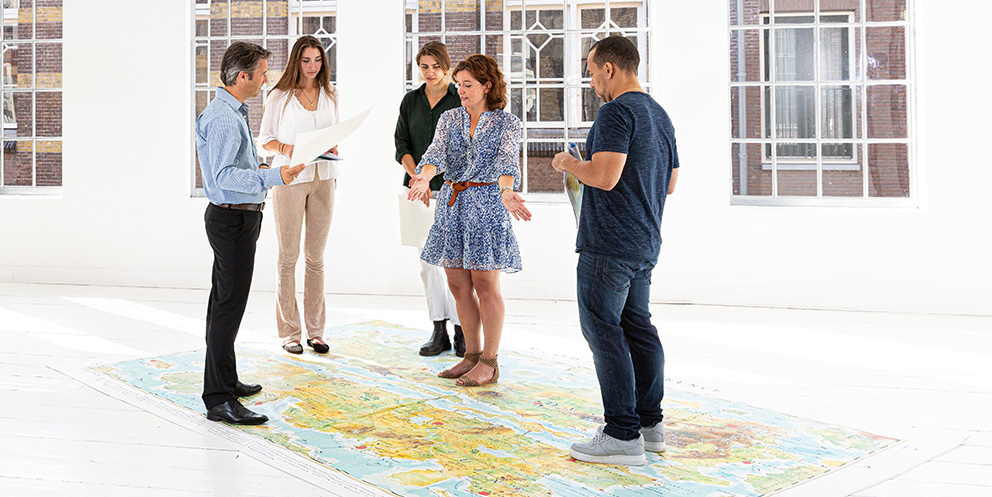
Instead of labeling one style as better than another, participants become curious about the terrain. Where do we work similarly? Where do we differ? What happens when pressure changes the route?
The visual metaphor lowers defensiveness while supporting conversations about:
The large-format map turns behavioral insight into a physical, participatory experience. Watch this introduction to see how visual cartography helps people explore differences together.
We use the map as part of a facilitated development process—not as a stand-alone personality exercise.
We learn the organizational context, team challenges, and desired outcomes.
Each participant completes the selected behavioral assessment.
Individual results are translated into a visual map for reflection and discussion.
Facilitated exercises help the team explore its collective behavioral landscape.
Participants identify practical shifts for communication, leadership, and collaboration.
When selected, individualized coaching helps turn insight into sustained practice.

Yamilette Williams, Ed.D., aka Dr. Yam, combines her MAPSTELL certification with PeopleKeys/John Maxwell Advanced Behavioral Analyst credentials and leadership-coaching experience. She brings over 20 years of experience facilitating change within organizations of all sizes. This allows Known Terrain to connect the visual power of the map with deeper behavioral interpretation, organizational priorities, and individualized coaching.
Known Terrain delivers MAPSTELL-informed experiences through certified facilitation.
Known Terrain is adapting the language of maps, routes, and discovery for couples and young people.
A guided couples workshop for understanding communication styles, navigating differences, and creating a shared route forward—without expecting two people to experience the same terrain in the same way.
An interactive youth experience designed to build self-awareness, recognize strengths, understand differences, and make more confident choices about relationships, leadership, and the road ahead.
We’ll help you determine whether a focused workshop, signature team-mapping experience, or sustained coaching engagement is the right route.
TeamMapping is based on an analysis of the different behavioral styles within a team or group. Each participant is placed on the map using insights from their PersonalMap, creating a visual overview of how the team is composed.
The resulting TeamMap helps explain interactions among team members and provides a practical foundation for improving communication and building more effective cooperation.
Ask about our BusinessMapping experience.